
Scope:
8 months. 2022.
Design sprint.
My Rol:
Product Designer, UX UI Designer.
Overview
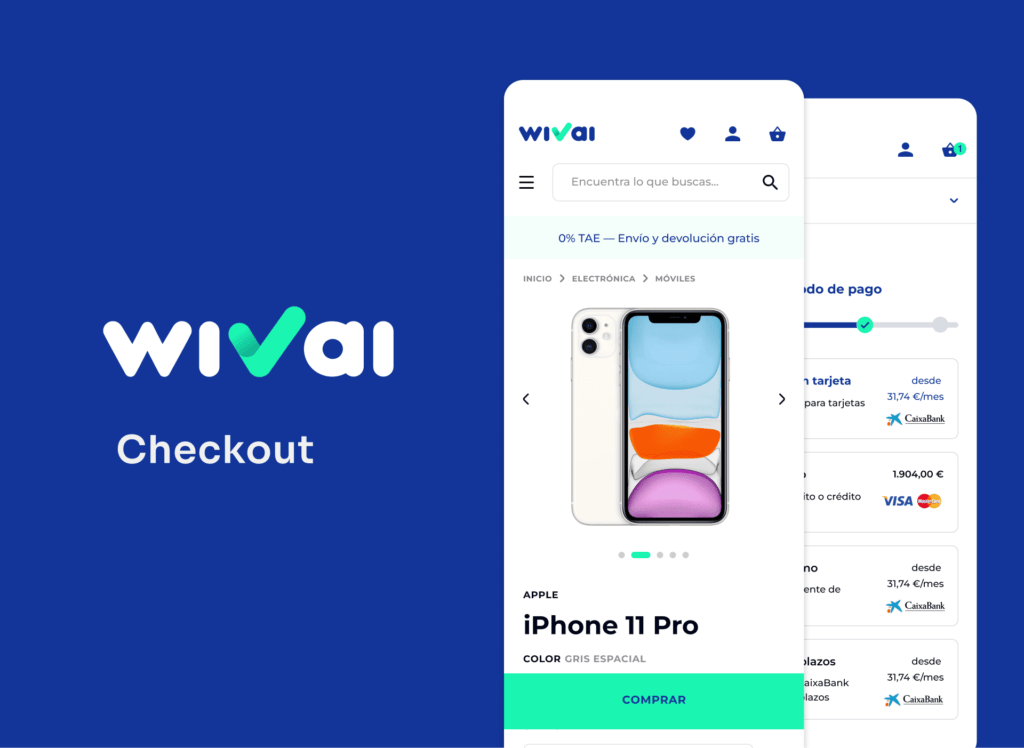
I led the optimization of wivai.com’s payment process to deliver an exceptional user experience. Addressing key challenges, I meticulously improved payment methods, usability, and other critical elements.
Before the optimization, wivai.com’s checkout faced various issues that compromised the user experience. Payment methods had limitations, causing frustration among users due to inadequate options. Usability was also impacted by unnecessary steps and unclear navigation, contributing to user drop-offs during the payment process.
Information presentation in the checkout induced uncertainty, as a lack of transparency about costs and transaction details diminished user confidence. Additionally, challenges in system responsiveness were identified, causing delays and generating anxiety among users.
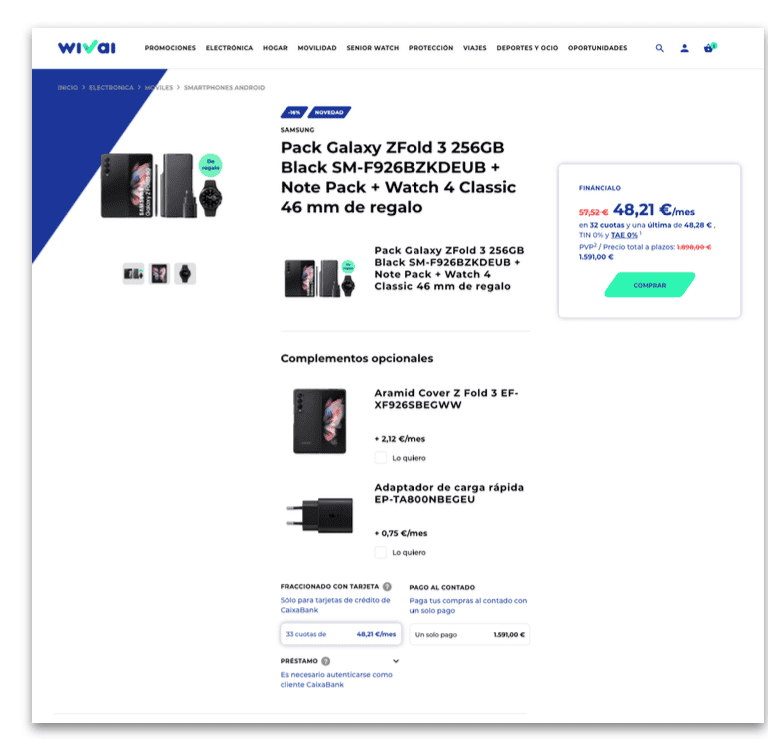

Limitation in expanding payment methods: The platform has reached its maximum capacity in terms of available payment methods.
Excessive allocation of screen space to installments: One-third of the total screen is dedicated to displaying installment information, which may be disproportionate or unnecessary.
Mobile user experience: The mobile version requires extensive scrolling, potentially impacting user experience negatively.
Suboptimal placement of the payment method decision: The choice of payment method is positioned at the end of the checkout process, which could be inconvenient and increase the likelihood of user abandonment.
Complexity in the checkout process: The purchase process is fragmented into more than three steps, significantly reducing the likelihood of successful completion. Ensuring the checkout does not exceed three steps aims to enhance efficiency and user satisfaction.
We decided to conduct research to implement potential improvements in the purchase flow and address this issue.
New installment payment method for non-customers in the checkout flow.
Redesign of the product page without payment methods and with a refreshed layout of elements.
Observation and identification of preferences through the Identification, Registration, and Guest Checkout processes.
Consolidation and optimization of shipping and billing screens into a single interface.
A User-Centered Design (UCD) methodology was implemented, placing users at the core of the research, with iterations revolving around the obtained results.
In my pursuit to improve the user experience on Wivai.com, I conducted a series of user tests with 10 participants from Catalonia. The goal of these tests was to comprehend how users interact with the product screen, revealing their priorities and preferences throughout the online shopping journey.
Comprehension tests:
Product screen
Identification
Payment methods screen
Navigation/Interaction tests:
Buttons (CTAs)
Product configuration (PDP)
Complete purchase
Total women: 5
Total men: 5
User: 28 years old.
User: 55 years old.
Catalunya
Wivai
User 1 – Laura
Age: 28
Gender: F
Occupation: Marketing
City: Barcelona
What is the first thing you notice when you arrive at the product screen?I usually focus on the product images to get a visual idea.
Do you usually look at the product specifications?
Yes, I always check the specifications to ensure it meets my needs.
Do you usually add insurance for your devices?
It depends on the type of product. For expensive devices, yes, but not always.
Are you interested in adding suggested accessories to your purchases
Sometimes, if they genuinely enhance my experience with the product.
User 8 – Andrés
Age: 38
Gender: M
Occupation: Human Resources
City: Tarragona
What is the first thing you notice when you arrive at the product screen?
I focus on available offers and discounts.
Do you usually look at the product specifications?
Only if it’s a product I need and fits my budget.
Do you usually add insurance for your devices?
No, unless it’s a costly and essential item.
Are you interested in adding suggested accessories to your purchases?Sometimes, if they are useful complements.

Image
Price
Gift
Bundle
Product Characteristics
Customization

When considering installment purchases and reaching the payment methods screen, do you find it clear to understand the differences between the available options?
When you are seeking information about installment purchases, what aspect do you find most relevant or crucial to know?
In the evaluation process for installment purchases, do you usually take into account the payment timeframe or carefully examine the associated interests?
User: Clara
Age: 34 years
Profession: Lawyer
City: Barcelona
Gender: Female
Question 1:
The differences between the payment methods aren’t crystal clear to me. The information seems a bit jumbled.
Question 2:
What concerns me the most when researching installment purchases is understanding the total cost at the end, factoring in interests and any hidden fees that might pop up.
Question 3:
During my evaluation process for installment purchases, I rarely focus on the payment timeframe. Instead, I meticulously examine the associated interests, sometimes feeling they lack clarity from the start.
User: Marc
Age: 28 years
Profession: Software Engineer
City: Girona
Gender: Male
Question 1:
The distinctions between payment methods aren’t jumping out at me. The presentation could use some refinement.
Question 2:
My primary concern when delving into information about installment purchases is detecting any potential traps in the contract or undisclosed charges that might catch me off guard.
Question 3:
In my assessment of installment purchases, I seldom delve into the payment timeframe. While interests are on my radar, I’m especially wary of any hidden fees that may emerge.
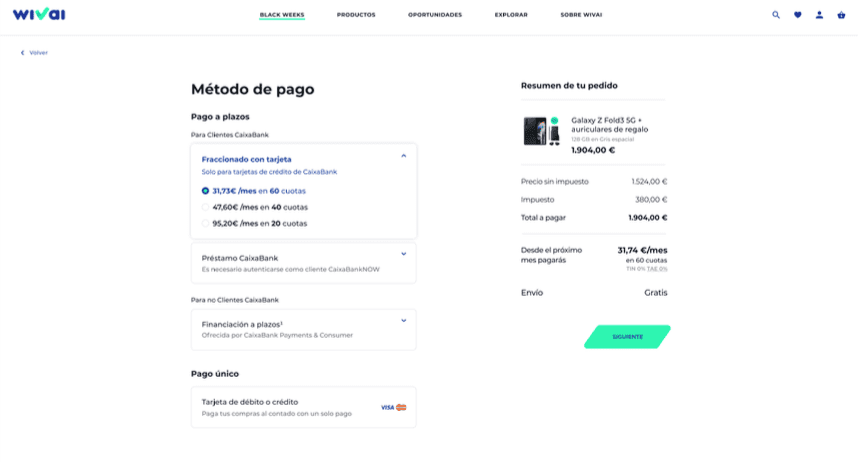
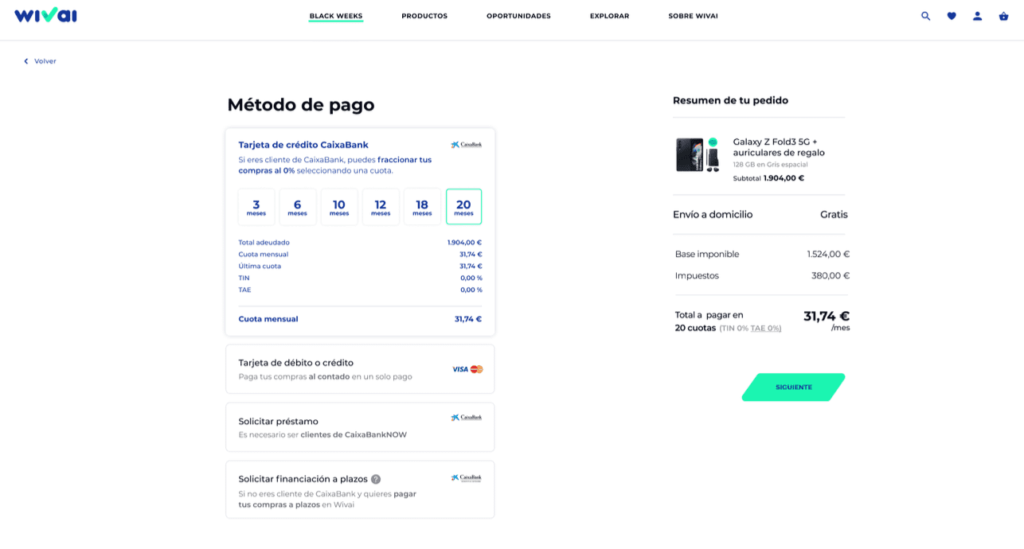
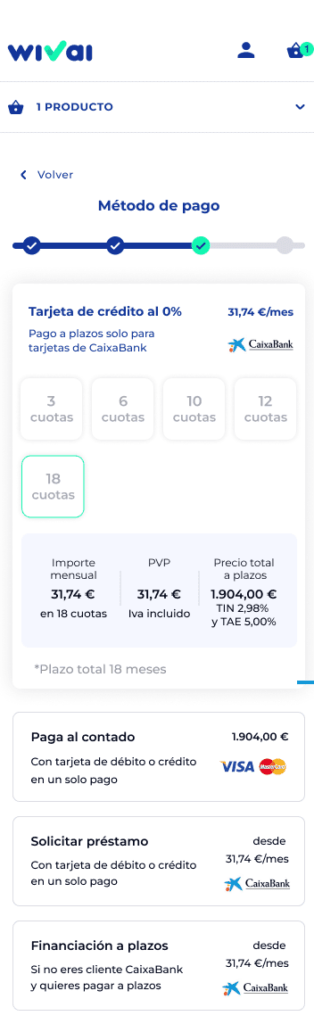
Future iterations should focus on presenting differences between payment methods more intuitively, addressing Clara’s feedback on confusing information. Transparency about total costs, including interests and fees, is crucial for user trust and informed decision-making. Marc’s preference for a clearer presentation of installment plan terms suggests a need for simplified language. Conducting additional usability testing in future iterations will be valuable for refining these aspects and enhancing the overall user experience.